If you picture a Ladue luxury home as just one look, think again. This part of St. Louis is known for estate-scale properties, mature landscaping, and a mix of architectural styles that give its streets a layered, established feel. If you are buying, selling, or simply trying to understand what makes Ladue stand out, this guide will help you recognize the styles that shape the market and what they can mean for long-term value, upkeep, and appeal. Let’s dive in.
Ladue’s architectural identity did not happen by accident. The city describes itself as a mature community of fine estates, large homes, elegant cottages, rolling hills, mature vegetation, and architecturally diverse homes.
That character is reinforced by zoning and design review. In many parts of Ladue, minimum lot sizes are unusually large, including 3 acres in District A, 1.8 acres in District B, and 30,000 square feet in District C, with smaller lots generally closer to commercial edges. For you as a buyer or seller, that helps explain why so many Ladue homes feel private, spacious, and visually distinct.
Much of Ladue’s oldest and most notable housing stock took shape in the 1920s and 1930s. Historic surveys of Central and Eastern Ladue show that farmland was gradually divided through private lanes and subdivision easements, then improved with architect-designed houses.
That early development pattern still matters today. It helps explain why Ladue has such a strong collection of custom homes rather than large runs of identical properties, and why certain streets are closely associated with specific architectural traditions.
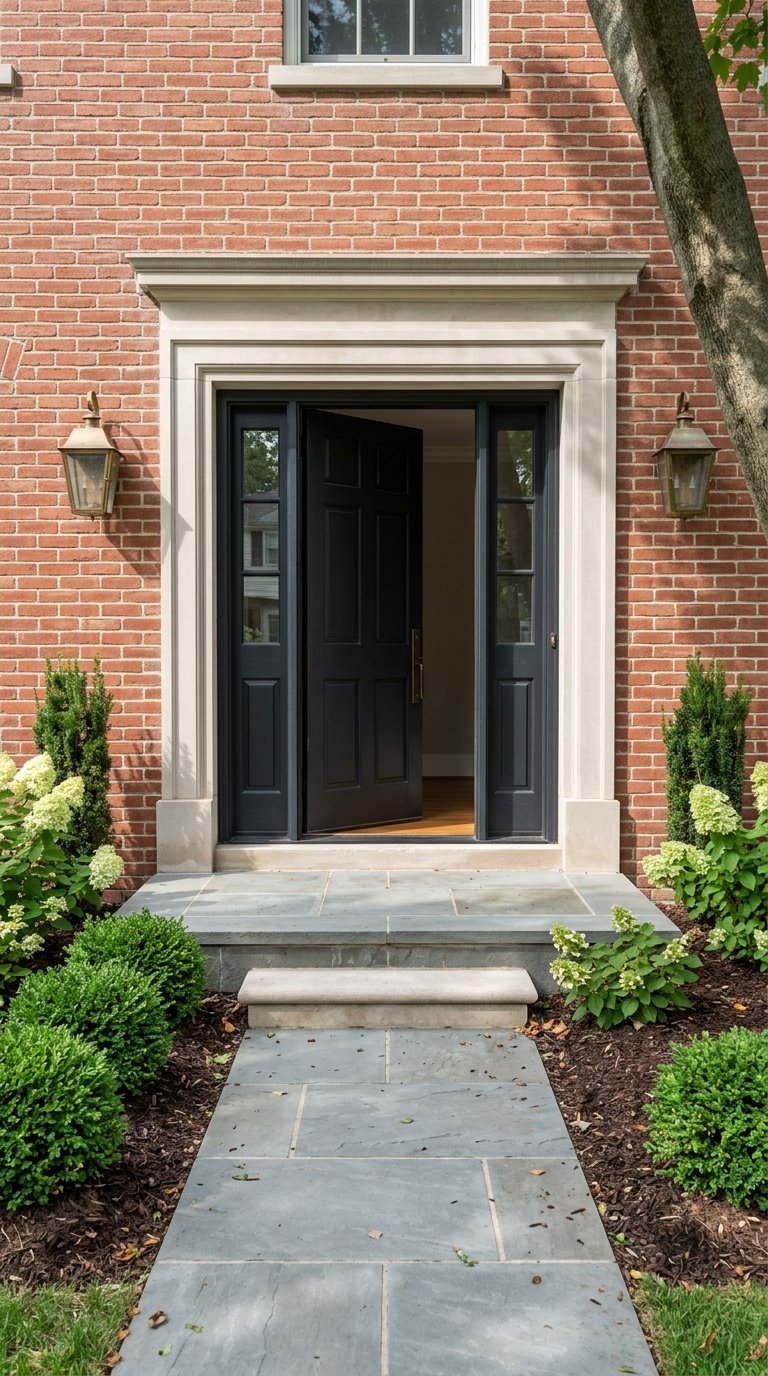
Among Ladue luxury homes, Georgian and Colonial Revival styles are some of the most recognizable. Historic survey work in Central Ladue notes that Georgian styling was adopted early and remained popular, helping establish the formal brick estate look many people still associate with the area.
These homes often emphasize symmetry and classical detailing. Features may include balanced facades, centered entries, columns or pilasters, fanlights, Palladian windows, pronounced porches, and brick paired with white-painted trim.
For buyers, these homes often deliver a timeless, formal appearance that tends to age well visually. For sellers, that classic curb appeal can be a major strength, especially when masonry, windows, trim, and entry details have been carefully maintained.
When you tour a Georgian or Colonial Revival home in Ladue, look for:
These details are a big part of why older Ladue estates often feel polished and enduring rather than trendy.
Tudor Revival is another defining Ladue style, especially on larger estate streets. Historic materials note that many of Ladue’s significant homes are Tudor Revival, and Edgewood Drive is specifically noted for its concentration of large Tudor residences.
This style brings a very different personality than Georgian homes. Instead of formal symmetry, Tudor Revival typically leans into texture, roofline drama, and storybook character.
Typical Tudor features include steeply pitched roofs, cross-gables, decorative half-timbering, tall narrow casement windows, and large chimneys. In Ladue, these elements often appear at a substantial scale, giving the homes a strong visual presence without losing their historic feel.
Tudor homes are often rich in detail, and that detail is part of the appeal. It can also mean more maintenance focus over time, especially around steep roofing, chimneys, stucco or half-timbering, and original-style windows.
If you are buying, it helps to look beyond charm and understand the condition of those exterior elements. If you are selling, presentation matters because buyers often respond strongly to a Tudor home’s character when those signature features are in good shape.
French Eclectic homes are less common in Ladue than Georgian or Tudor properties, but they are an important part of the city’s luxury mix. Historic survey information notes that architects working in Ladue used French Eclectic along with other period styles, which helps explain why you see select French-inspired custom estates rather than a single repeated model.
These homes often stand out for their romantic, refined look. Common features include tall, steeply pitched hip roofs, flared eaves, large chimneys, brick, stone, or stucco walls, and small leaded-pane windows. Entries may be arched or have classical detailing.
For many buyers, French Eclectic homes offer a softer, more old-world look than Georgian homes while still feeling substantial and elegant. For sellers, that can be a powerful differentiator when the home’s architectural details have been preserved and photographed well.
In Ladue, Mediterranean and Italian Renaissance Revival homes are notable partly because they are rare. One historic nomination describes a Ladue residence as a rare example of Italian Renaissance Revival, and earlier surveys identified only a small number of homes labeled Mediterranean.
That scarcity matters in the luxury market. When a style is uncommon, it can create a strong sense of individuality for the right buyer.
These homes tend to feature a boxier form, stucco exteriors, flat roofs, and decorative friezes, along with arched forms that set them apart from the city’s more common brick revival homes. If you come across one in Ladue, you are likely looking at an architectural outlier rather than a neighborhood norm.
Rare architectural styles can be especially memorable during a home search. They may not match every buyer’s taste, but they often leave a strong impression because they offer something distinct within a market known for more traditional revival styles.
From a selling standpoint, unique homes usually benefit from thoughtful positioning. Clear marketing, strong photography, and a careful explanation of what makes the design special can help buyers appreciate the home on its own terms.
Ladue is not frozen in the early 20th century. The city’s Architectural Review Board guidelines state that they have been updated to incorporate contemporary building practices, materials, and designs while still maintaining compatibility with Ladue’s historic character.
That means you may also see custom mid-century homes, ranch-style properties, and newer contemporary residences in the market. A National Register form for the Czufin House in Ladue describes a low-profile, mid-twentieth-century custom-designed residence, showing that later architectural chapters are part of the city story too.
Ranch-style homes are generally defined by long, shallow, one-story forms, low-pitched roofs, horizontal lines, attached garages, and large picture windows. In Ladue, these homes can appeal to buyers who want architectural simplicity, a lower profile, or a layout that feels more connected to the landscape.
One reason Ladue feels cohesive despite its variety is the city’s review framework. The Architectural Review Board was created soon after incorporation to help preserve neighborhood compatibility.
For you, that means Ladue values architectural diversity, but not visual disconnect. The goal is not to make every home look the same. It is to maintain a residential character built around spacious lots, mature vegetation, and homes that fit their surroundings.
That matters if you are planning updates, comparing homes, or preparing a property for sale. In Ladue, architecture is not just about style. It is also about how a home contributes to the larger streetscape.
A home’s architectural style often gives you clues about where future maintenance may show up. While every property is different, the visible design features can help you understand where attention is often needed.
Here is a simple way to think about it:
| Style | Common focus areas |
|---|---|
| Georgian or Colonial Revival | Masonry, windows, trim, formal entry details |
| Tudor Revival | Steep roofs, chimneys, stucco, half-timbering, casement windows |
| French Eclectic | Roofing, chimneys, stucco or masonry, leaded windows |
| Mediterranean or Italian Renaissance Revival | Stucco condition, drainage, roof-water management |
| Mid-century or contemporary | Roof drainage, glazing performance, preserving horizontal massing |
If you are buying, this can help you ask better questions during your search. If you are selling, it can help you focus on the exterior and design features most likely to shape first impressions.
For buyers, Ladue offers more than square footage and lot size. It offers a chance to choose a home style that fits how you want to live, maintain your property, and present your home over time.
For sellers, architecture is a key part of the story. A well-positioned Ladue listing should do more than mention bedrooms and baths. It should help buyers understand the home’s design, place it within Ladue’s broader architectural identity, and highlight the features that make it stand out in a market known for quality and distinction.
That is where local guidance makes a difference. Understanding how a Tudor differs from a Georgian in buyer perception, or how a rare Mediterranean home should be presented, can shape pricing, preparation, and marketing strategy in meaningful ways.
If you are thinking about buying or selling in Ladue, Medelberg Savage Group can help you evaluate a home’s architectural character, market position, and presentation so you can move forward with confidence.
MEDELBERG SAVAGE GROUP
16505 WILD HORSE CREEK RD
CHESTERFIELD MO 63017
Margie Medelberg
[email protected]
(314) 265-3888
Clay Savage
[email protected]
(636) 399-8237
Keremie Kiddy
[email protected]
(314) 779-8268
Terri Rea
[email protected]
(314) 374-5128
MEDELBERG SAVAGE GROUP
16505 WILD HORSE CREEK RD
CHESTERFIELD MO 63017
Margie Medelberg
[email protected]
(314) 265-3888
Clay Savage
[email protected]
(636) 399-8237
Keremie Kiddy
[email protected]
(314) 779-8268
Terri Rea
[email protected]
(314) 374-5128