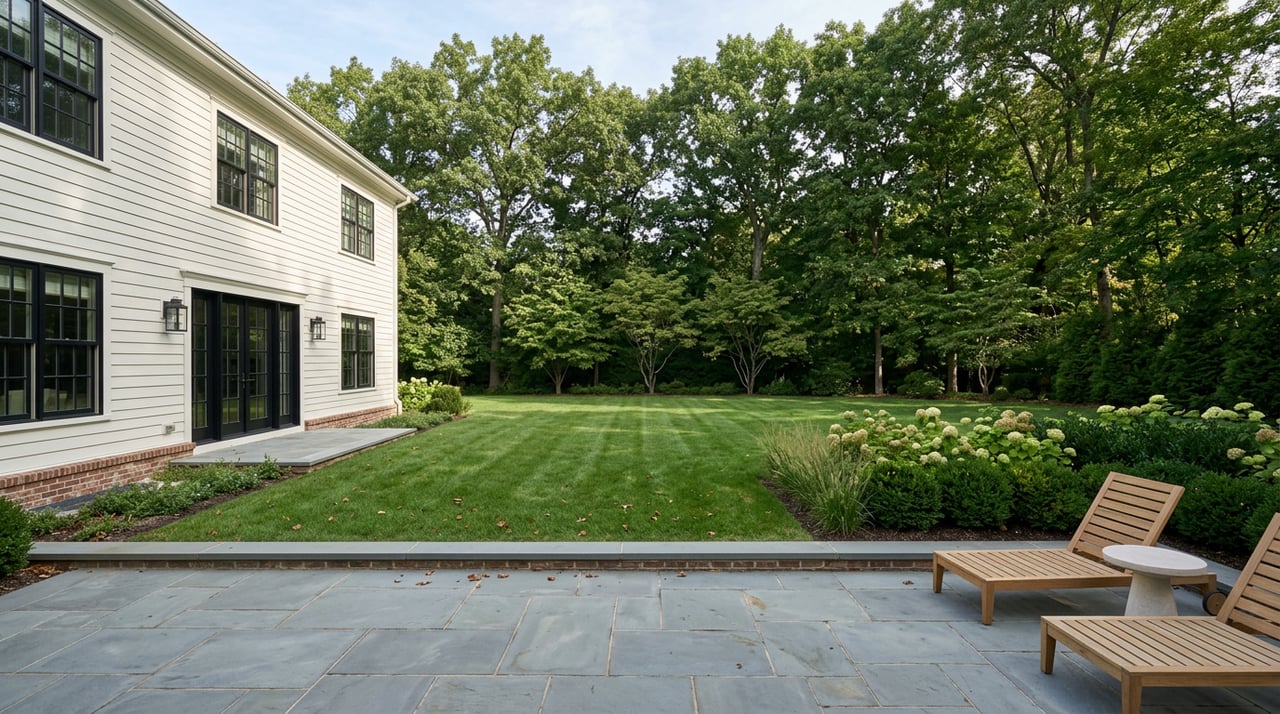
What if your next move gave you room to breathe, entertain, and truly live? In Town and Country, estate living is about more than square footage. It combines acre-plus lots, thoughtful privacy, and homes designed for everyday comfort and big occasions. In this guide, you will learn what defines estate living locally, how zoning protects the character, what features to expect, and how to plan your next step whether you are buying or selling. Let’s dive in.
Estate living in Town and Country starts with land. Many homes sit on 1.0 to 3.0 or more acres, and the city’s rules are a big reason why that feeling of space holds up block to block.
Two residential districts structure lot sizes: Estate (E) and Suburban Estate (SE). The city’s code sets minimums that directly shape privacy and yard size. In the Estate district, the minimum lot area is 80,000 square feet, and in the Suburban Estate district it is 43,560 square feet, or exactly 1 acre. Minimum lot widths and setback rules further separate homes and preserve tree cover. You can review the city’s requirements in Article IX, Sections 405.420 and 405.430 of the Estate and Suburban Estate zoning standards.
Raw acreage is a starting point. Usable yard area, topography, and mature trees influence where you place outdoor amenities and how private the home feels. Broad setbacks and low building coverage keep yards open, but parcel shape and slope often decide how well a lot supports a pool, sport court, or guest parking.
Estate listings in Town and Country often emphasize indoor-outdoor flow, generous storage, and multiple places to gather. Here is what you tend to see.
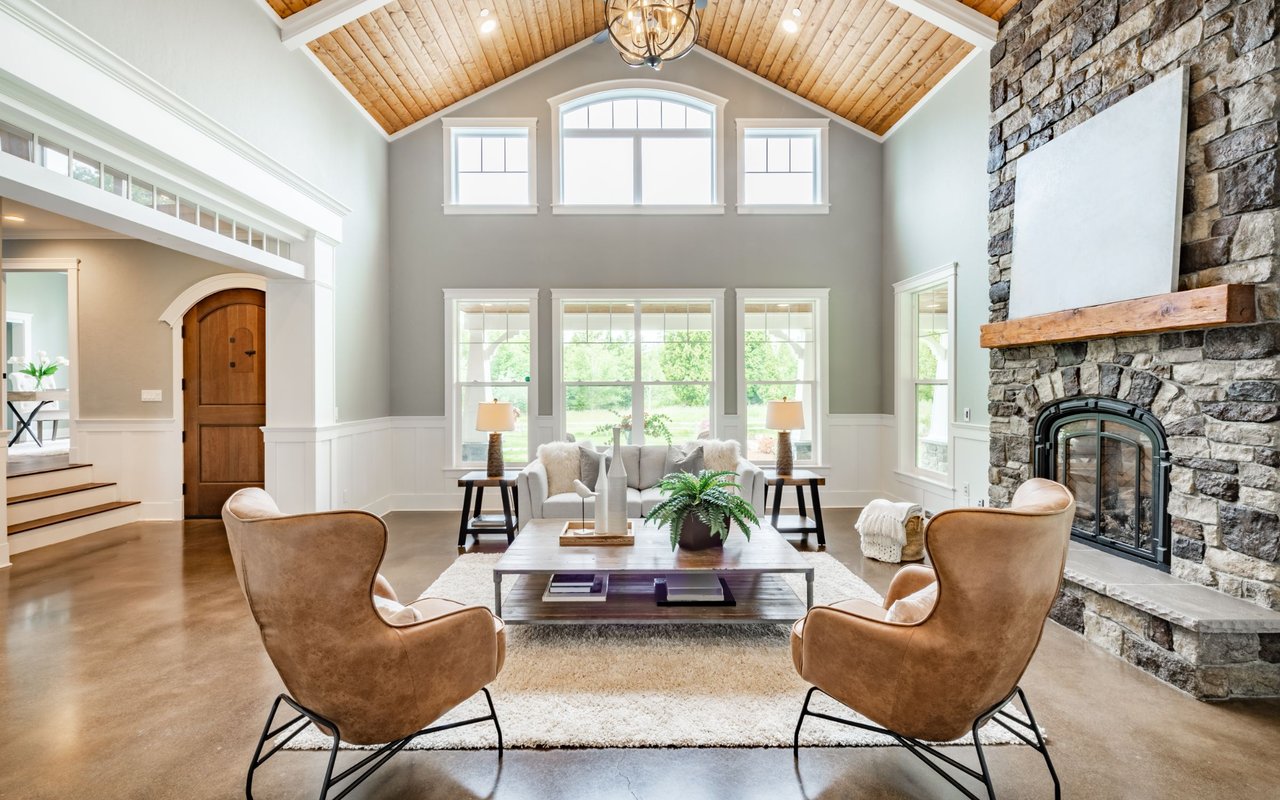
Interior square footage commonly ranges from about 3,000 to more than 9,000 square feet. Larger custom builds can push above 7,000 square feet. Many homes include multiple home offices, flexible bonus rooms, and finished lower levels. A walkout lower level is a frequent value add because it connects entertaining spaces to the backyard.
Outdoor kitchens, covered patios, pools and pool houses, and well-planned hardscapes are common. Circular driveways and 3 to 4 car garages support guest parking and hobbies. Inside, you often find multi-zone HVAC, wine rooms, theaters, and generous mudrooms that make daily life run smoothly.
You will see a mix of Traditional and Transitional styles alongside Colonial, Georgian, French country, and Tudor influences. Curb appeal is elevated, but the variety lets you choose between classic lines and modern finishes while staying aligned with the neighborhood feel.
Small, luxury markets can swing quickly because a handful of large sales move averages. Online portals often show different numbers for Town and Country from month to month. That variance is normal with limited inventory. Use recent local MLS data for precise comps when you are ready to act.
What pushes value higher: usable flat yard space, private settings with mature trees, modernized kitchens and baths, a walkout lower level, a strong indoor-outdoor entertaining setup, and accessory structures that are permitted and well integrated.
Estate neighborhoods are spread across Town and Country, often near signature corridors and parks. The city’s maps are helpful if you want to visualize where specific districts and subdivisions sit.
Town and Country is served by Clayton Road, Mason Road, and Woods Mill Road, with quick access to I-64 and I-270 for commutes to central St. Louis, Clayton, and area medical centers. If you want to see how Estate and Suburban Estate districts align with these roads, study the Town and Country zoning map. To explore named subdivisions and enclaves, including areas commonly associated with estate lots, use the residential subdivision map.
City parks such as Longview Farm Park, Drace Park, Preservation Park, and Town Square anchor daily life. Queeny Park sits just beyond the city line and offers expansive trails and recreation. You can preview amenities and locations on the city’s Parks page.
Several private schools attract families to the area. Principia School maintains a large Town and Country campus and offers K–12 options for day and boarding students. Westminster Christian Academy has a Town and Country campus as well. Nearby schools frequently mentioned in buyer searches include MICDS in Ladue, John Burroughs in Ladue, and Chaminade in Creve Coeur. Learn more about Principia School, Westminster Christian Academy, and MICDS.
If you are thinking about a pool, pool house, sport court, or an outbuilding, plan ahead. Estate districts allow accessory structures, but they are regulated for size, height, location, screening, and use.
Some structures can be permitted by right, while others need conditional use or special approvals. Timelines vary by scope. Before you finalize design work, review the city’s rules in Article IX of the zoning code and speak with the city planner about your parcel’s specifics, including setbacks and screening.
A property can sit on more than an acre yet have a smaller buildable envelope because of setbacks, slopes, or natural features. When you evaluate a lot, ask for a survey, check topography, and confirm the buildable area. Consider how the driveway, garage orientation, and tree preservation will impact your plans.
Estate transactions reward thoughtful planning and polished presentation. You deserve a partner who understands both land and lifestyle. As a full-service team, we coordinate pricing strategy, staging, professional photography, and marketing distribution, and we bring practical design and construction insight to help you weigh improvements and costs. For sellers, our luxury exposure attracts qualified buyers. For buyers, we focus on lot quality, code considerations, and resale value so you can move forward with confidence.
If you are exploring estate living in Town and Country, we would love to be your guide. Reach out to the Medelberg Savage Group to start a conversation about your goals.
MEDELBERG SAVAGE GROUP
16505 WILD HORSE CREEK RD
CHESTERFIELD MO 63017
Margie Medelberg
[email protected]
(314) 265-3888
Clay Savage
[email protected]
(636) 399-8237
Keremie Kiddy
[email protected]
(314) 779-8268
Terri Rea
[email protected]
(314) 374-5128
MEDELBERG SAVAGE GROUP
16505 WILD HORSE CREEK RD
CHESTERFIELD MO 63017
Margie Medelberg
[email protected]
(314) 265-3888
Clay Savage
[email protected]
(636) 399-8237
Keremie Kiddy
[email protected]
(314) 779-8268
Terri Rea
[email protected]
(314) 374-5128